Da Bai Cai Fen Tiao — Napa Cabbage with Glass Noodles
Quick Info
- Flavor
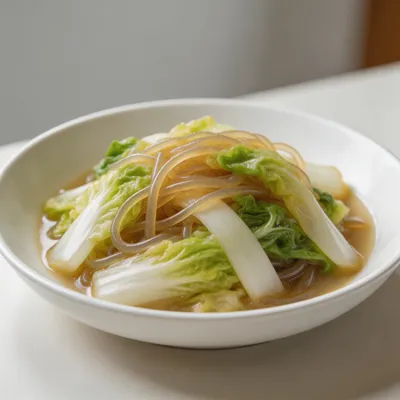
- Mild, savory, and deeply comforting. The cabbage melts into sweetness while the soy-based broth infuses the slippery glass noodles with gentle umami.
- Texture
- Silky soft cabbage leaves and springy, slippery glass noodles that soak up the savory broth
- Spice Level
- Not spicy — No heat at all — pure mild comfort
- Temperature
- Served Hot
Ingredients
Allergens
Confirmed
The Story
This dish is the soul of northeastern Chinese home cooking. In the frozen winters of Dongbei — China’s three northeastern provinces of Heilongjiang, Jilin, and Liaoning — families have relied on napa cabbage and dried sweet potato noodles for centuries. These two ingredients could be stored through the harshest months, making them staples of survival cooking. What started as peasant food became a beloved classic, and today no Dongbei restaurant menu is complete without it. When northerners move to other parts of China, this is the dish that makes them homesick.
What to Expect
A generous bowl or clay pot arrives filled with translucent, wobbly glass noodles tangled among soft, pale leaves of napa cabbage in a light soy-flavored broth. The cabbage has been braised until it practically dissolves on your tongue, releasing a natural sweetness that balances the savory sauce. The glass noodles — made from sweet potato starch — are bouncy and slippery, soaking up every bit of flavor from the pot. Bits of ginger and green onion float throughout, adding fragrance without overpowering the gentle flavors.
This is not a flashy dish. It is quiet, warm, and satisfying in the way that only real home cooking can be. It pairs perfectly with a bowl of steamed rice.
Tips
This dish is entirely plant-based and one of the safest orders for vegetarians in China, though you should confirm no meat stock was used if that matters to you. Some versions add pork belly slices or dried tofu for extra richness — just ask “有肉吗?” (yǒu ròu ma? — does it have meat?). The glass noodles can be tricky to pick up with chopsticks since they’re slippery — don’t be shy about using a spoon. Look for this dish at any Dongbei restaurant (东北菜), where it typically costs just 15-25 yuan. It’s also a great side dish to pair with heavier, meatier northeastern plates.