Dao Xiao Mian — Knife-Cut Noodles
Quick Info
- Flavor
- Varies by topping, but typically savory and robust. The noodles themselves have a pleasant wheaty flavor that stands up to hearty meat and tomato-egg sauces.
- Texture
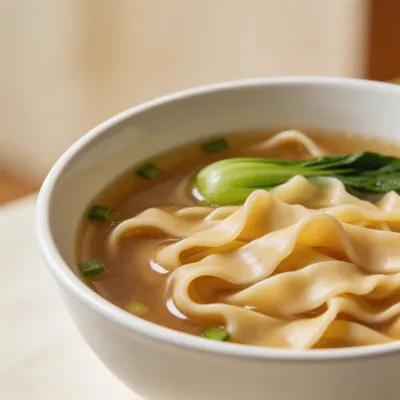
- Thick, irregular noodle slices — chewy on the thin edges, soft and pillowy in the thicker middle
- Spice Level
- 🌶️ — Usually mild, with optional chili oil and vinegar on the side
- Temperature
- Served Hot
Ingredients
Allergens
Confirmed
Possible
These ingredients may vary by restaurant. Ask your server to confirm.
The Story
Born in Shanxi province — China’s noodle heartland — knife-cut noodles showcase one of the most theatrical cooking techniques in Chinese cuisine. The cook holds a block of firm dough against their forearm and rapidly shaves off strips directly into a pot of boiling water using a curved blade. The noodles fly through the air in an arc, each one slightly different in thickness, giving them their signature uneven texture. Legend says the technique originated during the Yuan Dynasty when Mongol rulers banned knives, and resourceful Shanxi cooks invented a thin metal strip to make noodles without a proper blade.
What to Expect
A generous bowl of thick, irregular noodle strips in a savory broth or sauce. The noodles are noticeably different from regular noodles — wider, thicker, with each piece uniquely shaped. The thin edges are chewy while the thicker centers are satisfyingly soft and doughy. Common toppings include braised pork sauce, tomato-egg, or lamb. A cruet of Shanxi aged vinegar is almost always on the table — locals pour it liberally.
Tips
If you see a chef shaving noodles at the front of the restaurant, you’ve found the real deal. Add Shanxi vinegar (山西老陈醋) — it’s the province’s pride and transforms the dish. Ask for “西红柿鸡蛋” (xī hóng shì jī dàn, tomato-egg) topping if you want something mild and familiar.