Gan Guo Bao Cai — Dry Pot Cabbage
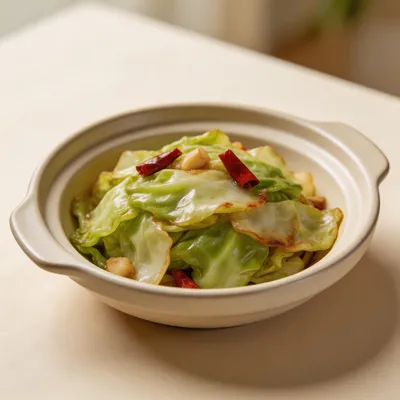
Quick Info
- Flavor
- Smoky, savory, and moderately spicy. Pork belly renders its fat into the cabbage, while dried chilies and doubanjiang add a slow-building warmth.
- Texture
- Crisp-edged cabbage with slightly chewy pork belly slices, all coated in a clinging, oily sauce
- Spice Level
- 🌶️🌶️ — Moderate heat from dried chilies — a warm tingle that builds gently
- Temperature
- Served Hot
Ingredients
Allergens
Confirmed
Possible
These ingredients may vary by restaurant. Ask your server to confirm.
The Story
Dry pot (干锅) is a cooking style that originated in Sichuan and Hunan, where ingredients are stir-fried in a small amount of oil with bold seasonings — no broth, no soup. The dish is typically served in a shallow metal pot set over a small flame to keep it sizzling at the table. Dry pot cabbage takes the familiar hand-torn cabbage and elevates it with sliced pork belly and a generous dose of dried chilies, turning a humble side dish into something more substantial.
Dry pot dishes became wildly popular across China in the 2000s, and today nearly every casual restaurant offers a dry pot section on the menu. Cabbage is one of the most common choices because it absorbs the smoky, spicy flavors beautifully while keeping its satisfying crunch.
What to Expect
A sizzling shallow pot or plate piled with torn cabbage leaves, thin slices of pork belly, and scattered dried red chilies. The cabbage edges are darkened and slightly blistered from high heat, while the pork belly is rendered and lightly crisped. Everything glistens with a thin, savory-spicy coating. The aroma hits you immediately — smoky, garlicky, with a pleasant chili warmth. It’s heartier than plain stir-fried cabbage and pairs perfectly with steamed rice.
Tips
This is a great gateway into dry pot cooking if you’re new to the style. At 25-40 yuan, it’s one of the more affordable dry pot options. If you see it served over a flame at the table, the bottom layer will continue to crisp — stir occasionally to prevent burning. For a pork-free version, ask for 素干锅包菜 (sù gān guō bāo cài), though not all restaurants will accommodate this.