Gan Guo Fei Chang — Dry Pot Pork Intestines
Quick Info
- Flavor
- Intensely savory and aromatic with smoky, charred notes. Doubanjiang provides a fermented chili depth, while cumin adds an earthy, almost grilled quality that makes every bite feel like a barbecue in a wok.
- Texture
- Crispy-edged intestine pieces with a chewy, bouncy center, mixed with blistered peppers and caramelized aromatics
- Spice Level
- 🌶️🌶️🌶️ — Serious heat from dried chilies and doubanjiang, with a lingering burn that builds over time
- Temperature
- Served Hot
Ingredients
Allergens
Confirmed
The Story
Dry pot (干锅) cooking is a Hunanese technique that takes the concept of a hotpot and strips away the broth. What remains is pure, concentrated flavor — ingredients stir-fried and served in a shallow metal pot set over a small burner at your table, staying sizzling hot throughout the meal. Pork intestines are one of the most popular dry pot fillings, loved for how the high, dry heat crisps their edges while keeping the interior tender and chewy. The technique spread from Hunan across all of China, and today you’ll find dry pot restaurants in every major city, often with menus listing dozens of possible main ingredients. Pork intestines remain a perennial favorite.
What to Expect
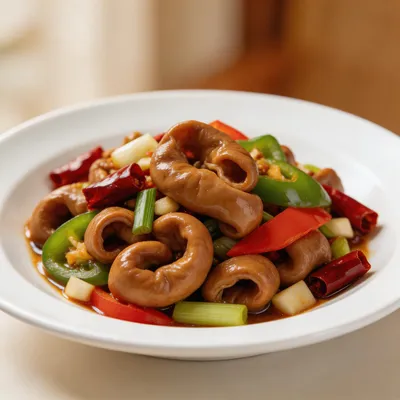
A shallow metal pot arrives at your table set over a small flame, still sizzling and popping. Inside you’ll find chunks of pork intestine that have been fried until their edges are golden and crispy, tossed together with sliced green and red peppers, whole dried chilies, sliced garlic, and ginger. The aroma of cumin hits you before the pot even reaches the table — it’s that distinctive dry pot smell that’s part stir-fry, part grill, entirely addictive.
Unlike a wet stew, there’s no sauce pooling in the pot. Instead, every ingredient is coated in a thin, intensely flavored layer of seasoned oil, doubanjiang, and spices. The intestines have a wonderful dual texture: crispy and slightly charred where they’ve been in contact with the hot pan, and chewy and bouncy in the center. The peppers blister and sweeten, and the whole dish intensifies as it continues cooking over the flame.
Tips
Dry pot dishes are meant to be shared and eaten slowly — the burner underneath keeps everything hot and continues to crisp the ingredients as you eat. The pieces at the bottom of the pot will get progressively more caramelized and crunchy, which many people consider the best part. This is a drinking dish (下酒菜) at heart, perfect with cold beer. If you find the heat too intense, order a mild dry pot dish alongside it to balance your meal. Many dry pot restaurants let you add extra vegetables to the pot as you eat — ask for lotus root (藕片) or potato slices (土豆片) to stretch the dish and temper the spice.