Jiu Cai Chao Ji Dan — Scrambled Eggs with Chinese Chives
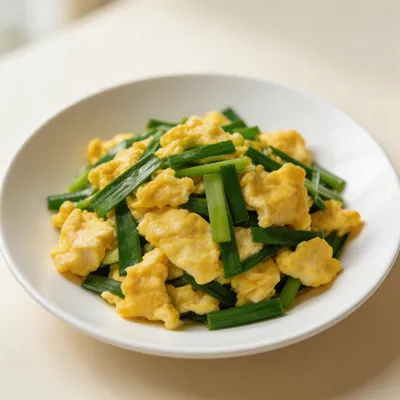
Quick Info
- Flavor
- Pungent and aromatic from the chives, balanced by the mild richness of scrambled eggs. A bold, oniony fragrance that's distinctly different from Western chives.
- Texture
- Fluffy, soft egg curds mixed with tender-crisp chive segments
- Spice Level
- Not spicy — No heat — the pungency comes from the chives themselves, not from chili
- Temperature
- Served Hot
Ingredients
Allergens
Confirmed
The Story
This dish is pure Chinese home cooking — the kind of thing every family makes at least once a week. Chinese chives (韭菜) are not the delicate herbs you might know from Western cooking. They’re flat, thick-bladed, and intensely aromatic with a garlicky punch. Paired with eggs, they’ve been a staple combination for centuries, appearing in recipes dating back to ancient agricultural texts. It’s one of the first dishes Chinese children learn to cook, and it remains a comfort food that adults never outgrow.
What to Expect
A vibrant plate of bright green chive segments tossed with large, fluffy curds of scrambled egg. The dish comes together in under two minutes in a blazing-hot wok, so the chives stay vivid and slightly crisp while the eggs puff up soft and golden. The aroma hits you first — a distinctive, almost garlicky fragrance that’s unmistakably Chinese chives.
The flavor is straightforward and satisfying: savory eggs enriched by the bold, pungent taste of the chives. There’s no sauce, no complexity — just two ingredients done right. It’s the kind of dish that makes plain white rice irresistible.
Tips
This is one of the safest orders for cautious eaters — simple, mild, and free from common allergens besides eggs. It’s also very affordable, usually one of the cheapest dishes on any restaurant menu. If you enjoy this, try the variation with chives and shrimp (韭菜虾仁) for a seafood twist. Note that Chinese chives have a much stronger flavor than Western chives — if you’re sensitive to allium flavors, start with a small taste.