Baked Naan Bread
Quick Info
- Flavor
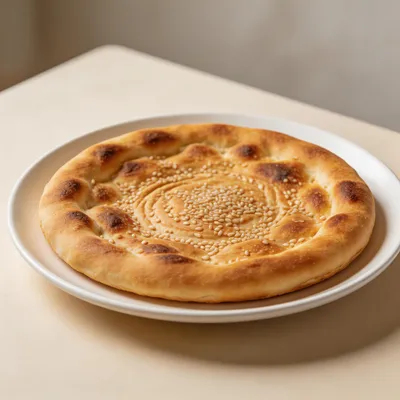
- Lightly savory with a wheaty, toasted aroma. Some varieties are enriched with onion, sesame, or butter for extra flavor.
- Texture
- Crispy outer crust with a soft, chewy interior. Denser than Western bread.
- Spice Level
- Not spicy
- Temperature
- Room Temperature
Ingredients
Allergens
Confirmed
Possible
These ingredients may vary by restaurant. Ask your server to confirm.
The Story
Naan is the daily bread of the Uyghur people in Xinjiang, China’s vast western region on the ancient Silk Road. It has been baked in tandoor-like clay ovens called “tonur” for over a thousand years, a tradition shared with Central Asian neighbors. In Uyghur culture, naan is sacred — it should never be placed upside down or thrown away. A traditional Uyghur saying goes: “You can go a day without tea, but not a meal without naan.” There are said to be over fifty varieties across Xinjiang.
What to Expect
A large, round, golden-brown flatbread with a distinctive pattern of small holes stamped into the center (which prevents it from puffing up unevenly). The rim is thicker and chewier, while the center is thinner and crispier. Fresh from the oven, it is extraordinary — the aroma of toasted wheat and sesame fills the air. Some varieties are studded with onion, others brushed with butter or egg wash. It keeps well for days, which made it the perfect travel food along the Silk Road.
Tips
At Xinjiang restaurants anywhere in China, naan is the standard bread accompaniment. Tear it into pieces and use it to scoop up lamb stew or dip in sauce. In Xinjiang itself, naan bakeries are on every corner — buy one fresh for an incredibly cheap and satisfying snack. It pairs perfectly with lamb skewers and Xinjiang-style tea. Look for the varieties with onion or butter baked in for extra flavor.