Liang Ban Ou Pian — Cold Dressed Lotus Root Slices
Quick Info
- Flavor
- Clean, tangy, and subtly sweet. The natural starchiness of lotus root absorbs the vinegar-soy dressing beautifully, with garlic providing a sharp aromatic backbone.
- Texture
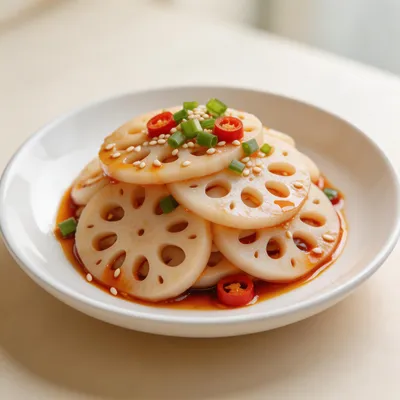
- Crisp and crunchy with a satisfying snap, each slice revealing the lotus root's signature lace-like hole pattern
- Spice Level
- 🌶️ — Barely any heat — just a few dried chili flakes for decoration and fragrance
- Temperature
- Served Cold
Ingredients
Allergens
Confirmed
The Story
Lotus root is one of China’s most beloved vegetables, harvested from the muddy bottoms of lotus ponds across the country. The plant has deep cultural significance — in Chinese Buddhism, the lotus symbolizes purity rising from muddy water. Hubei province, with its vast network of lakes and wetlands, is the undisputed capital of lotus root cultivation, and cold-dressed lotus root is a signature dish there. But you’ll find this dish everywhere in China, from street-side cold dish counters to banquet tables. It’s the kind of everyday dish that Chinese people grow up eating and never tire of.
What to Expect
A plate of translucent, coin-shaped slices arrives, each one displaying the lotus root’s beautiful natural pattern of holes — like edible lace. The slices have been blanched just enough to soften them slightly while preserving their distinctive crunch. They’re dressed in a light, glossy coating of vinegar and soy sauce, with visible bits of minced garlic and perhaps a few dried chili flakes or Sichuan peppercorns. The taste is clean and refreshing: tangy vinegar, savory soy, fragrant sesame oil, and the naturally mild sweetness of the lotus root itself. It’s crunchy, light, and incredibly refreshing.
Tips
This is one of the most diet-friendly dishes on any Chinese menu — low in calories, high in fiber, and naturally gluten-free aside from the soy sauce. The crunch factor depends on how long the lotus root was blanched, so quality varies between restaurants. Look for slices that still have a firm snap when you bite them. If you see a version described as 糖醋藕片 (táng cù ǒu piàn), that’s a sweeter, sweet-and-sour variation. Lotus root is also wonderful in soups — if you enjoy the flavor, try 莲藕排骨汤 (lotus root pork rib soup) as a follow-up.