Qian Ceng Bing — Layered Flatbread
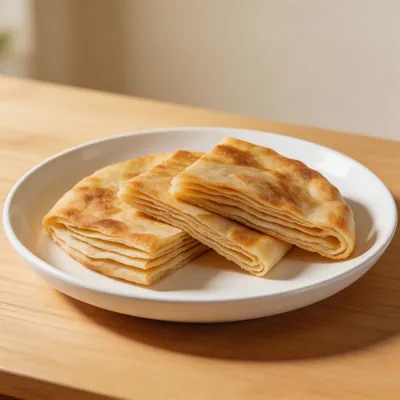
Quick Info
- Flavor
- Savory, lightly oily, with subtle scallion or five-spice notes between layers.
- Texture
- Thin, flaky layers that separate when pulled apart — crispy outside, soft and chewy inside
- Spice Level
- Not spicy
- Temperature
- Served Hot
Ingredients
Allergens
Confirmed
Possible
These ingredients may vary by restaurant. Ask your server to confirm.
The Story
Qian ceng bing means “thousand-layer cake” — a poetic name for a flatbread made by repeatedly folding and rolling oiled dough to create dozens of paper-thin layers. It’s a traditional staple across northern China, with roots in Shandong and Hebei provinces. The technique of laminating dough with oil is ancient, and every region has its own spin — some add scallions, some use sesame paste, others incorporate sugar for a sweet version.
What to Expect
A round, golden flatbread arrives cut into wedges, revealing its many delicate layers inside. The outside is lightly crispy from the griddle, while the interior layers are soft, chewy, and slightly translucent from the oil between them. Pull a wedge apart and the layers separate like pages of a book. It’s mild-flavored and meant to accompany soups, stews, or congee — the Chinese equivalent of good bread alongside your meal.
Tips
Qian ceng bing is a carb-lover’s dream — order it as a side with any saucy dish. Some versions are quite oily (the oil creates the layers), so don’t expect health food. Sweet versions filled with red bean paste or brown sugar are popular as afternoon snacks. Eat it while hot; the layers lose their separation as it cools.