Qin Cai Chao La Rou — Celery with Cured Pork
Quick Info
- Flavor
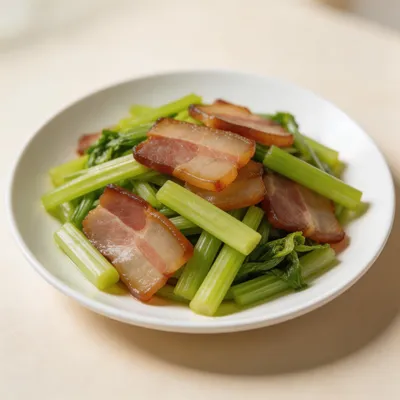
- Smoky and herbaceous. The deep, cured pork flavor meets the clean, slightly bitter freshness of Chinese celery, creating a savory combination that's aromatic without being heavy.
- Texture
- Chewy, firm slices of cured pork contrasted with crisp, snappy celery stalks that retain their crunch through the stir-fry
- Spice Level
- 🌶️ — Mild warmth from dried chilies — just enough to notice
- Temperature
- Served Hot
Ingredients
Allergens
Confirmed
The Story
Celery with cured pork is the quieter sibling of the garlic sprout version, but no less beloved across Hunan and neighboring provinces. Chinese celery — thinner, more fragrant, and more assertive than its Western cousin — has been cultivated in China for over two thousand years. When paired with 腊肉, the celery’s herbaceous bite acts as a natural counterbalance to the smoky richness of the cured meat. This is everyday Hunanese home cooking at its finest: a handful of ingredients, a screaming hot wok, and a dish on the table in under five minutes. It shows up at family dinners, work canteens, and hole-in-the-wall restaurants with equal frequency.
What to Expect
A vibrant stir-fry of thinly sliced cured pork and bright green celery segments, tossed together over high heat with garlic and a scattering of dried red chilies. The celery keeps its crunch — it should snap between your teeth — while the pork slices are thin enough to have slightly crisped edges but still maintain that characteristic chewy, dense texture of cured meat. The aroma is immediately identifiable: woodsmoke from the pork, the clean herbaceous scent of celery, and a whisper of garlic.
Chinese celery (中国芹菜) is noticeably different from Western celery — the stalks are thinner, hollower, and have a much stronger, almost parsley-like flavor. If you’ve only ever had regular celery, expect a more intense taste.
Tips
This is a great ordering choice when you want something flavorful but not overwhelming. The celery provides a refreshing counterpoint to the salty, smoky pork, making this one of the lighter 腊肉 dishes. You’ll find it at any Hunan restaurant and most general Chinese restaurants that serve home-style cooking. Like all 腊肉 dishes, it’s on the salty side, so have rice ready. If you enjoy this, try the garlic sprout version (蒜苗炒腊肉) next — same technique, different vegetable, equally delicious.