Qing Chao Sun Pian — Stir-Fried Bamboo Shoot Slices
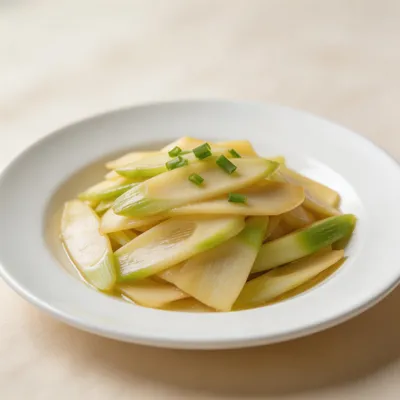
Quick Info
- Flavor
- Clean, fresh, and subtly sweet. The natural sweetness of bamboo shoots shines through with minimal seasoning — just salt, a touch of soy, and the brightness of fresh garlic.
- Texture
- Crisp and snappy slices with a satisfying crunch that holds up through stir-frying, slightly fibrous with a clean bite
- Spice Level
- Not spicy — No heat at all — pure, clean vegetable flavors
- Temperature
- Served Hot
Ingredients
Allergens
Confirmed
The Story
Bamboo shoots have been part of Chinese cuisine for over two thousand years — the poet Su Dongpo famously wrote that one could live without meat, but not without bamboo. Fresh bamboo shoots appear in spring markets across southern and central China, and their arrival is celebrated like a seasonal event. Qing Chao Sun Pian is the simplest and most respectful way to prepare them: a quick stir-fry that does nothing to mask the shoot’s own delicate, sweet flavor. It is the kind of dish a Hangzhou grandmother would insist needs no sauce, no spice, no complication.
What to Expect
A plate of thinly sliced bamboo shoots, pale yellow to ivory in color, glistening lightly with oil. The slices are cut on a bias to maximize surface area and show off the shoot’s layered grain. The flavor is mild, clean, and gently sweet — quite different from the canned bamboo shoots you may have encountered elsewhere. Fresh shoots have a brightness and crunch that is entirely their own. A few slices of garlic and wisps of green onion round out the plate without competing for attention.
Tips
This dish is at its absolute best in spring when fresh bamboo shoots (春笋) are in season — roughly March through May. Outside of spring, restaurants use preserved or winter shoots, which are still good but lack the same sweetness. It is one of the lightest dishes on any menu, making it an excellent counterpoint to rich braised meats or spicy stir-fries. If you see 油焖笋 (braised bamboo shoots) on the same menu, that is the richer, soy-braised cousin — try both to compare.