Shou Si Qie Zi — Hand-Torn Eggplant
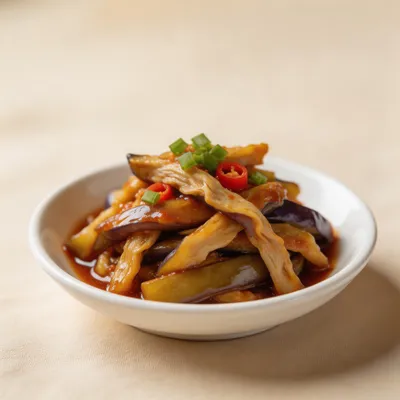
Quick Info
- Flavor
- Light and savory with a strong garlic punch. The steamed eggplant absorbs the soy-vinegar-garlic dressing beautifully, with a subtle sesame nuttiness in the background.
- Texture
- Silky, melt-in-your-mouth steamed eggplant torn into soft, irregular strips
- Spice Level
- 🌶️ — Barely any heat — just a whisper of chili oil for color and fragrance
- Temperature
- Room Temperature
Ingredients
Allergens
Possible
These ingredients may vary by restaurant. Ask your server to confirm.
The Story
Hand-torn eggplant is a beloved home-style dish that showcases the Chinese philosophy of keeping things simple. Rather than deep-frying eggplant (which soaks up enormous amounts of oil), this method steams it whole until perfectly tender, then tears it into strips by hand. The technique preserves the eggplant’s delicate, creamy texture while keeping the dish light and healthy. The torn strips create an irregular surface that soaks up the garlicky dressing like a sponge.
This approach to eggplant is found across China, with regional variations in the dressing. Northern versions tend to use more garlic and vinegar, while southwestern versions might add more chili. Regardless of region, the principle is the same: let the eggplant’s natural silky texture shine.
What to Expect
Long, soft strips of pale eggplant arranged on a plate, glistening with a light brown dressing and flecked with minced garlic. The eggplant is incredibly soft — almost custard-like — and each piece is saturated with the savory-tangy dressing. The garlic flavor is pronounced but mellowed by the vinegar and a touch of sugar. It’s a refreshing, light dish that works well in hot weather or as a counterpoint to heavier, oilier dishes.
Tips
A great choice if you want something light, healthy, and not spicy. This dish is served at room temperature, making it ideal as a starter while you wait for hot dishes to arrive. If you’re sensitive to garlic, be warned — the raw minced garlic is generous and assertive. Pairs beautifully with rice porridge (粥) or as a side to any meat dish.