Xinjiang Pilaf
Quick Info
- Flavor
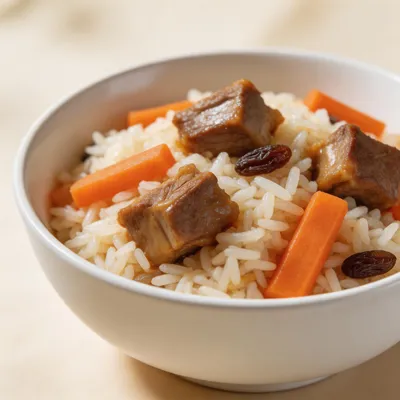
- Warmly spiced and subtly sweet. Cumin-scented lamb, sweet carrots, and raisins meld into fragrant rice — aromatic and comforting.
- Texture
- Fluffy, oil-glossed rice grains with tender lamb pieces, soft carrot strips, and plump raisins
- Spice Level
- Not spicy
- Temperature
- Served Hot
Ingredients
The Story
Shǒu zhuā fàn literally means “hand-grab rice” — Uyghur tradition calls for eating it by hand from a communal platter. This Central Asian pilaf (called “polo” in Uyghur) is the festive centerpiece of Xinjiang’s food culture, served at weddings, holidays, and family gatherings. It traveled the Silk Road and shares roots with pilafs from Uzbekistan, Iran, and Turkey. In Xinjiang restaurants across China, it’s the signature dish.
What to Expect
A mound of golden, glistening rice arrives with large pieces of bone-in lamb nestled on top. Strips of sweet carrot and scattered raisins stud the rice, which is fragrant with cumin and lamb fat. Each grain is separate and glossy. The lamb is fork-tender from slow cooking. The flavor is warmly aromatic — cumin-forward, gently sweet from the carrots and raisins, with rich lamb undertones.
Tips
In Xinjiang restaurants, this is typically eaten with chopsticks or a spoon despite the name. Pair with a skewer of lamb kebab (羊肉串) and a pot of brick tea for the full Xinjiang experience. The portion is large — it can easily serve two.