Shui Zhu Rou Pian — Water-Boiled Pork Slices
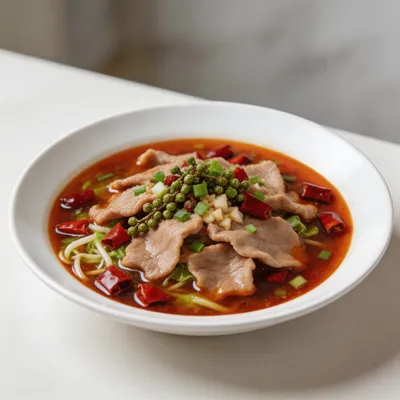
Quick Info
- Flavor
- Fiery, numbing, and intensely savory. Layers of chili heat, Sichuan peppercorn numbness, and a deep savory base from chili bean paste.
- Texture
- Paper-thin, silky-tender pork slices floating in a searingly spicy broth over crisp vegetables
- Spice Level
- 🌶️🌶️🌶️🌶️🌶️ — One of the spiciest dishes you'll encounter — hotter than the hottest buffalo wings, with added mouth-numbing sensation
- Temperature
- Served Hot
Ingredients
Allergens
Confirmed
Possible
These ingredients may vary by restaurant. Ask your server to confirm.
The Story
The name “water-boiled” is one of Chinese cuisine’s greatest understatements. Yes, the pork is technically poached in liquid — but that liquid is a volcanic pool of chili oil, dried chilies, and Sichuan peppercorns. The dish was born in Sichuan’s Zigong salt mining region, where workers needed cheap, intensely flavored food to fuel long days. The original version used beef (水煮牛肉), but pork became the everyday variation that spread across China.
What to Expect
A large bowl arrives looking like a crime scene — a lake of red chili oil with dried chilies and peppercorns floating on top. Beneath this alarming surface, you’ll find incredibly thin, tender slices of pork resting on a bed of blanched vegetables. The pork is velveted (coated in cornstarch), making each slice melt-in-your-mouth smooth.
The first bite will be searingly hot. Then the Sichuan peppercorn numbness kicks in, and suddenly your entire mouth is tingling. The heat builds with each bite. But underneath all the fire, there’s real flavor — deep, savory, and complex. The vegetables at the bottom provide cool relief between bites.
Tips
Do NOT drink cold water to combat the spice — it makes it worse. Room-temperature beer or warm tea helps more. Eat this with plenty of plain white rice, scooping the pork and broth over the rice to dilute the intensity. If you can’t handle extreme spice, order 水煮鱼 (water-boiled fish) instead, which is often slightly milder, or ask for “wēi là” (微辣, mild spice).