Suan La Fei Chang — Hot and Sour Pork Intestines
Quick Info
- Flavor
- Bold, tangy, and fiery. Pickled peppers deliver a sharp sourness that cuts through the rich, fatty intestine, while dried chilies and Sichuan peppercorn add layers of heat and a tingling numbing sensation.
- Texture
- Chewy and slightly bouncy intestine pieces with a satisfying resistance, coated in a slick, punchy sauce
- Spice Level
- 🌶️🌶️🌶️ — Genuinely spicy — the pickled peppers and dried chilies deliver sustained heat, amplified by the numbing tingle of Sichuan peppercorn
- Temperature
- Served Hot
Ingredients
Allergens
Confirmed
The Story
Pork intestines — 肥肠 (féi cháng), literally “fat intestines” — are one of the most celebrated offal ingredients in Chinese cuisine, particularly in Sichuan and Chongqing. While many Western diners might hesitate, in China this is considered a genuine delicacy, prized for its unique chewy texture that can’t be replicated by any other ingredient. The hot and sour preparation is a Sichuan classic that showcases the province’s genius for bold, layered flavors. Pickled peppers (泡椒) provide the sour punch, while the usual Sichuan arsenal of dried chilies and peppercorns brings the heat. It’s a dish that rewards the adventurous eater.
What to Expect
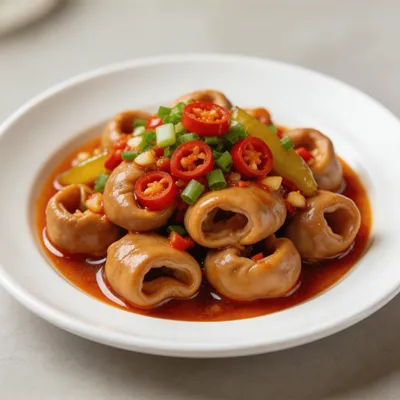
Thick rings or segments of cleaned pork intestine arrive glistening in a reddish, oily sauce dotted with pickled pepper pieces, dried chili segments, and visible Sichuan peppercorns. The intestines have been thoroughly cleaned and pre-boiled before stir-frying, so they’re tender but with a distinctive chewy, slightly springy bite that’s completely unique.
The sauce hits you with sourness first — sharp and vinegary from the pickled peppers — followed immediately by building chili heat and the characteristic numbing tingle (麻辣) of Sichuan peppercorn. The intestine itself has a mild, rich flavor that absorbs the sauce beautifully. It’s intense, complex, and deeply satisfying if you’re open to it.
Tips
This is an adventurous choice, but it’s one of the best ways to experience real Sichuan flavor if you can get past the ingredient. The intestines are meticulously cleaned before cooking — any concerns about hygiene are unfounded in a proper restaurant. If you’ve never tried 肥肠, this hot and sour preparation is actually one of the best introductions because the bold flavors complement the natural richness perfectly. The spice level is significant, so have cold drinks ready. This dish is especially popular as a drinking snack (下酒菜) and pairs well with cold beer. Look for it at Sichuan and Chongqing restaurants, or at the many small shops specializing in 肥肠.