Xiang La Du Kuai — Spicy Tripe Chunks
Quick Info
- Flavor
- Fiery and aromatic with layers of chili heat, numbing Sichuan peppercorn, and a savory soy-vinegar backbone. The spices hit boldly upfront, then linger with a warm tingle.
- Texture
- Chewy, springy tripe pieces with a satisfying crunch on the outside from high-heat wok frying, contrasted by crisp vegetables
- Spice Level
- 🌶️🌶️🌶️ — Solid chili heat with Sichuan peppercorn numbness — enough to make your lips tingle
- Temperature
- Served Hot
Ingredients
Allergens
Confirmed
The Story
Offal cooking is a proud tradition across China, and pork tripe holds a special place in the Sichuan kitchen where cooks have perfected the art of transforming humble stomach lining into something genuinely exciting. The key is the wok — scorching hot and screaming with oil — which gives the tripe its signature seared edges while keeping the interior bouncy and tender. Street vendors and hole-in-the-wall restaurants across Sichuan and Chongqing compete fiercely over whose version packs the most flavor, and debates about the ideal chili-to-peppercorn ratio can get surprisingly passionate.
What to Expect
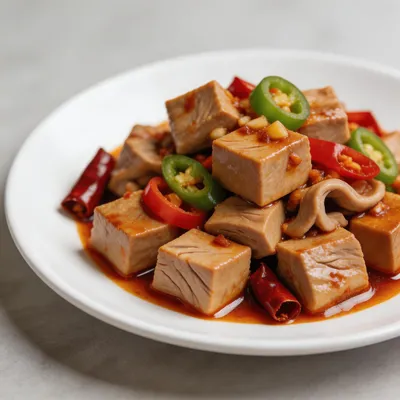
A sizzling plate of bite-sized tripe pieces arrives, tossed with a tangle of dried red chilies, green onion rings, and sliced garlic. The tripe is cut into chunky rectangles with a crosshatch pattern scored into the surface, which helps it absorb the spicy sauce and creates an interesting visual texture. The aroma is intensely savory — roasted chili, garlic, and a sharp note of vinegar. Each piece has a distinctive chew that is firm but not rubbery, with charred edges from the blazing wok. The sauce clings to every piece: dark, glossy, and unapologetically spicy.
Tips
This dish rewards adventurous eaters. If you are new to tripe, this is actually one of the best introductions — the bold spicing distracts from any unfamiliar flavors, and the wok-frying eliminates any gamey taste. Pair it with a big bowl of steamed rice to balance the heat. If you see “爆炒肚块” on a menu, it is essentially the same dish. Ask for “微辣” (wēi là, mild spicy) if you want to ease in, though locals will tell you the full heat is the whole point.