Xiao Chao Huang Niu Rou — Stir-Fried Yellow Cattle Beef
Quick Info
- Flavor
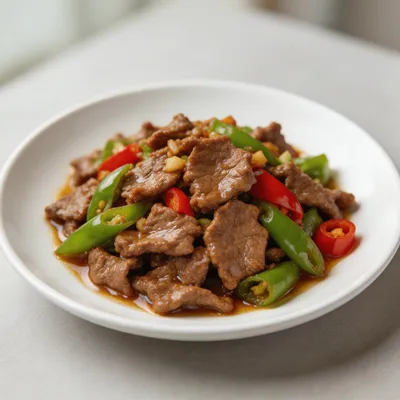
- Deeply savory and smoky with a sharp chili kick. The beef carries a pronounced wok-charred flavor, complemented by cumin-like aromatics and the bright heat of fresh peppers.
- Texture
- Tender, slightly chewy beef slices with a seared exterior, mixed with crisp peppers and celery
- Spice Level
- 🌶️🌶️🌶️ — Solid chili heat from fresh peppers — spicy but manageable for most
- Temperature
- Served Hot
Ingredients
Allergens
Confirmed
Possible
These ingredients may vary by restaurant. Ask your server to confirm.
The Story
Hunan province has a long tradition of raising yellow cattle (黄牛) — a native Chinese breed prized for its lean, flavorful meat. Unlike the marbled beef favored in Japanese or Western cuisine, yellow cattle beef is firm and full of beefy depth, which makes it ideal for high-heat wok cooking. This dish became a signature of Changsha restaurants in particular, where chefs discovered that the combination of seared yellow cattle beef and fresh local peppers created something irresistible.
The “小炒” (small stir-fry) technique is key: small batches cooked over maximum flame, so the beef sears quickly and stays tender rather than steaming in its own juices. Many Hunan restaurants proudly advertise their use of genuine 黄牛肉 because the flavor difference from regular beef is significant.
What to Expect
Thin slices of dark, seared beef tossed with colorful pepper strips and sometimes celery or onion. The beef has a distinctive charred aroma from the wok and a satisfying chew without being tough. The peppers add both heat and sweetness. A faint hint of cumin gives it an aromatic complexity you might not expect. The dish arrives on a hot plate, still sizzling, with a rich, dark sauce clinging to every piece.
Tips
If the menu specifically says 黄牛肉 (yellow cattle beef), it’s worth ordering — the flavor is notably richer than standard beef. This dish pairs perfectly with steamed rice. For a complete Hunan meal, combine it with a vegetable dish like 手撕包菜 (hand-torn cabbage) to balance the richness.