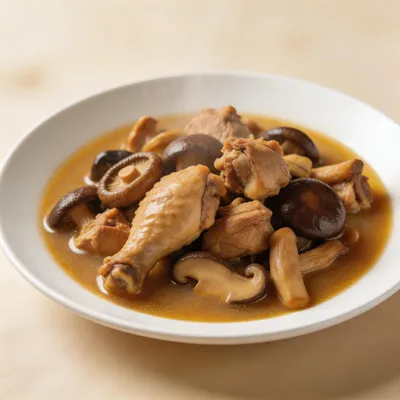
Ye Mo Gu Dun Xiao Ji — Wild Mushroom Stewed Chicken
Quick Info
- Flavor
- Deep, earthy umami from wild mushrooms melds with rich chicken broth. Comforting and savory with a clean, honest flavor — no spice, no tricks, just pure stewed goodness.
- Texture
- Fall-off-the-bone tender chicken in a thick, silky broth, with soft, meaty mushrooms that have absorbed all the savory cooking liquid
- Spice Level
- Not spicy — No heat at all — a warm, gentle, purely savory dish
- Temperature
- Served Hot
Ingredients
Allergens
Possible
These ingredients may vary by restaurant. Ask your server to confirm.
The Story
小鸡炖蘑菇 is one of the most iconic dishes of northeastern China, often listed among the region’s “four great stews” (东北四大炖). The dish was born from the forests and farmlands of Dongbei, where free-range chickens scratched in village yards and wild mushrooms — especially the prized 榛蘑 (hazel mushroom) — grew abundantly in the birch and oak forests after summer rains.
The genius of the dish lies in the pairing: chicken provides rich, fatty broth while wild mushrooms contribute an intense earthiness and umami depth that cultivated mushrooms simply cannot match. It is quintessential comfort food — the kind of dish that northeastern grandmothers simmer for hours in iron pots on coal-heated stoves. Though it originates in the northeast, its fame has spread across China, and it appears on Shandong-style menus as part of the broader northern Chinese culinary tradition.
What to Expect
A large clay pot or iron casserole arrives at the table, lid still on, with fragrant steam escaping around the edges. Inside is a rich, golden-brown broth thick with collagen, pieces of bone-in chicken, and generous handfuls of dark, wrinkled wild mushrooms. The chicken is stewed until it practically falls apart when touched with chopsticks. The mushrooms have swelled with broth and turned silky-soft, with a deep, woodsy flavor that permeates every spoonful. Some versions include glass noodles (粉条) that soak up the broth beautifully. The overall impression is warming, homey, and deeply satisfying — like a hug in a bowl.
Tips
This is an excellent choice for travelers who prefer mild, comforting food without chili heat. The dish is widely available across northern China, typically 50-80 yuan for a generous pot meant for sharing. It pairs perfectly with steamed rice or mantou (steamed buns) to soak up the rich broth. Ask if the version includes 粉条 (glass noodles) — they’re a traditional addition and make the dish more filling. The broth is the star, so don’t leave it behind. This dish takes time to prepare, so expect a longer wait than stir-fried dishes — usually 20-30 minutes.