Moon Cake
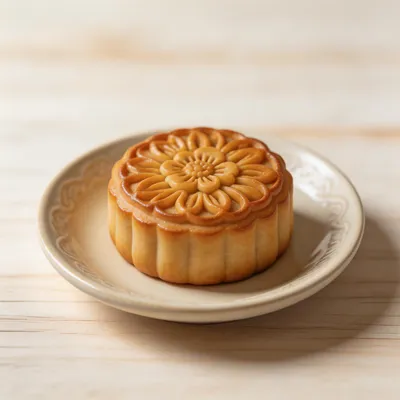
Quick Info
- Flavor
- Rich, dense, and deeply sweet. Traditional fillings feature lotus seed paste with a salty-savory egg yolk center that balances the sweetness.
- Texture
- Thin, tender pastry shell encasing a dense, smooth, slightly oily filling
- Spice Level
- Not spicy
- Temperature
- Room Temperature
Ingredients
Allergens
Confirmed
Possible
These ingredients may vary by restaurant. Ask your server to confirm.
The Story
Moon cakes are inseparable from the Mid-Autumn Festival (中秋节), celebrated on the 15th day of the 8th lunar month when the moon is fullest. Legend says secret messages were once hidden inside moon cakes to coordinate a rebellion against Mongol rulers. Today, they are exchanged as gifts between family, friends, and business partners — elaborately boxed moon cakes are a major seasonal industry worth billions of yuan.
What to Expect
A dense, heavy pastry about the size of your palm, with intricate patterns stamped on top showing Chinese characters or floral designs. Cut it open to reveal a thick layer of golden lotus seed paste and, in classic versions, a bright orange salted egg yolk at the center — representing the full moon. The combination of sweet paste and salty yolk is the signature experience. Modern variations include ice cream, chocolate, and fruit flavors.
Tips
Moon cakes are extremely rich — share one by cutting it into quarters. They are seasonal (August–September) but available year-round at bakeries. Cantonese-style (广式) with lotus paste is the classic; Suzhou-style (苏式) has flaky pastry. Avoid the cheapest boxed sets as gifts — moon cake quality and brand matter in Chinese gift-giving culture.