Zi Bu Yang Ti — Nourishing Braised Lamb Trotters
Quick Info
- Flavor
- Deep, savory braising liquid infused with warming Chinese medicinal spices — star anise, cinnamon, and angelica root. The lamb itself is mild and slightly sweet, absorbing the complex aromatics of the long braise.
- Texture
- Fall-off-the-bone tender with a rich, gelatinous mouthfeel from the collagen-heavy trotters. The skin is soft and sticky, the tendons meltingly smooth
- Spice Level
- 🌶️ — Gentle warmth from ginger and white pepper — comforting rather than spicy
- Temperature
- Served Hot
Ingredients
Allergens
Possible
These ingredients may vary by restaurant. Ask your server to confirm.
The Story
In China’s northwest, lamb is king, and nothing goes to waste. Braised lamb trotters are a cold-weather staple in Xi’an and across Shaanxi province, where the dish doubles as both comfort food and traditional nourishment. The name “滋补” (zī bǔ) means “nourishing” or “restorative,” reflecting the Chinese medicinal philosophy built into the recipe. Ingredients like angelica root, goji berries, and ginger are chosen not just for flavor but for their believed warming and blood-strengthening properties. This is food as medicine — a concept deeply woven into Chinese culinary culture.
What to Expect
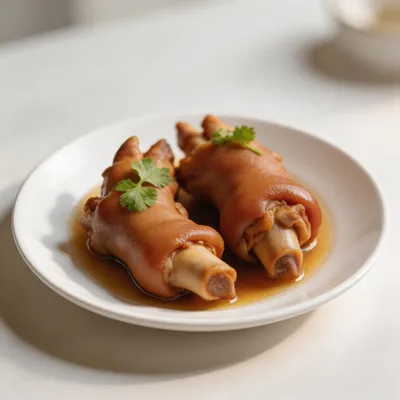
A bowl of whole lamb trotters swimming in a dark, fragrant braising broth. The meat is deeply browned and impossibly tender — a gentle tug with chopsticks pulls it clean off the bone. The broth is rich and slightly thick from the natural gelatin, with visible goji berries floating like small red jewels and pieces of ginger and star anise settled at the bottom. The aroma is warm and complex — earthy spices, sweet lamb, and a hint of herbal depth. It is hearty, satisfying, and deeply warming.
Tips
This is a hands-on dish — use the disposable gloves that many restaurants provide, or ask for them. The trotters are mostly collagen and connective tissue rather than lean meat, so expect a sticky, gelatinous eating experience rather than big bites of muscle. That gelatin is the whole point and is considered highly nutritious in Chinese food culture. Order this on a cold evening alongside flatbread (馍) to soak up the broth. At 40-60 yuan, it is mid-range in price. Best found at Muslim quarter restaurants and northwestern-style eateries in Xi’an.